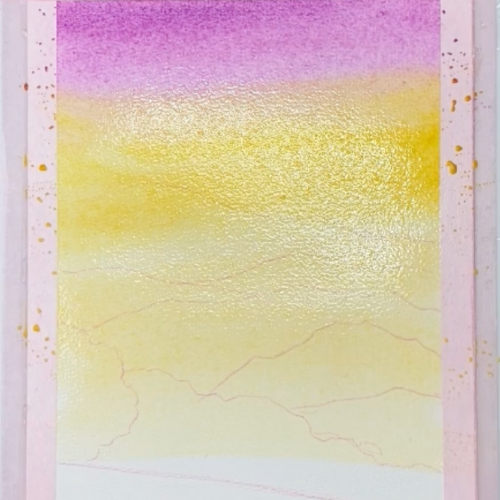
Before we begin, let’s gather the essential materials you’ll need for this watercolor tutorial:
- Watercolor paper (cold-pressed or rough surface) : Winsor&Newton, Arches, Arteza, Artisto sketchbook
- Watercolor paints Paul Rubens, Winsor & Newton, Mozart, Kuratake, LightWish, Mungyo
- Watercolor brushes (round and flat brushes in various sizes): Artegria, Nicpro, Arteza
- Pencil and eraser: Pental, Uniball, Blackwing, Luechtturm
- Water container: Faber-Castell, MylifeUnite
- Paper towels or a rag
- Masking fluid (optional) : JoFook, Mont Marte, Schmincke, Winsor&Newton
- Ruler (optional): Geometer set
With these materials at hand, you’ll be well-equipped to embark on your watercolor skyline painting journey.
Mountain watercolor painting is a captivating art form that combines the beauty of nature with the fluidity and versatility of watercolors. As an artist, I find immense joy in capturing the majestic peaks, serene valleys, and ever-changing skies that characterize mountainous landscapes. This art form allows us to express the grandeur of nature while experimenting with color, texture, and light.
Creating a mountain landscape in watercolor is more than just replicating a scene; it’s about conveying the emotion and atmosphere of the environment. The delicate yet vibrant nature of watercolors makes them an ideal medium for depicting the intricate details and subtle variations found in mountainous terrains. Whether you’re a seasoned artist or a beginner, mountain watercolor painting offers endless opportunities for creative exploration.
Key Techniques for Capturing Mountain Landscapes
Capturing the essence of mountain landscapes requires mastering several key watercolor techniques. Here are some fundamental methods to incorporate into your practice:
Wet-on-Wet Technique: This involves applying wet paint onto a wet surface, creating soft, blurred edges. It’s perfect for painting skies and distant mountains, where you want to achieve a sense of depth and atmosphere.
Wet-on-Dry Technique: Painting wet paint on dry paper allows for more defined and controlled brushstrokes, ideal for adding details like rocky textures or tree lines.
Layering and Glazing: This technique involves building up layers of transparent washes. By gradually adding layers, you can create depth and richness in your landscapes.
When I paint mountain scenes, I often begin with a wet-on-wet wash for the sky, allowing the colors to blend naturally. As the painting progresses, I switch to wet-on-dry techniques to add details and textures to the foreground. Layering and glazing help me achieve the depth and complexity that bring my scenes to life.
Practicing these techniques is essential for mastering mountain watercolor painting. As you experiment, you’ll discover which methods work best for different elements of your landscape, leading to more dynamic and lifelike results.

Step 1
Apply the First Wash: Start with a wet-on-wet wash for the sky and distant mountains. Use light, diluted colors to establish the background.:
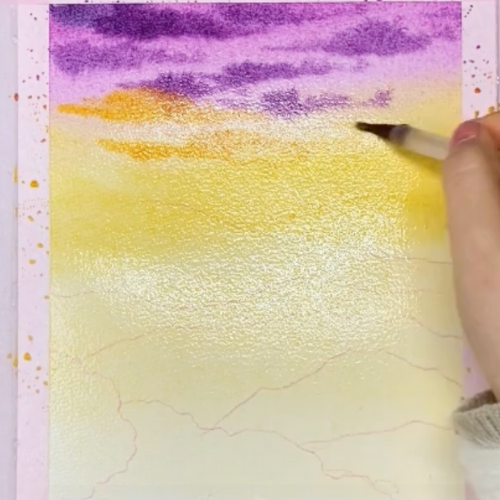
Step 2
Adding clouds using wet-on-wet technique:
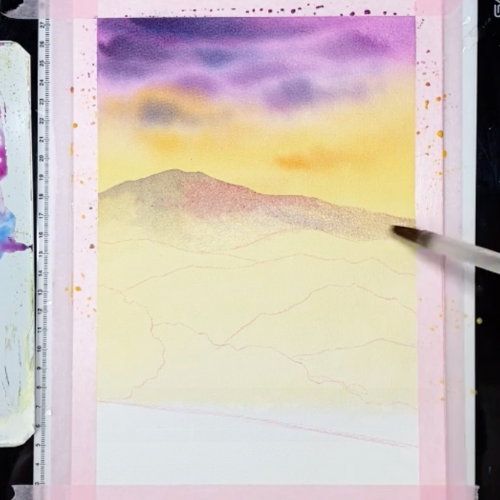
Step 3
Develop the Midground: Once the background is dry, use wet-on-dry techniques to add midground elements, such as tree lines and hills. Gradually build up layers to create depth.:
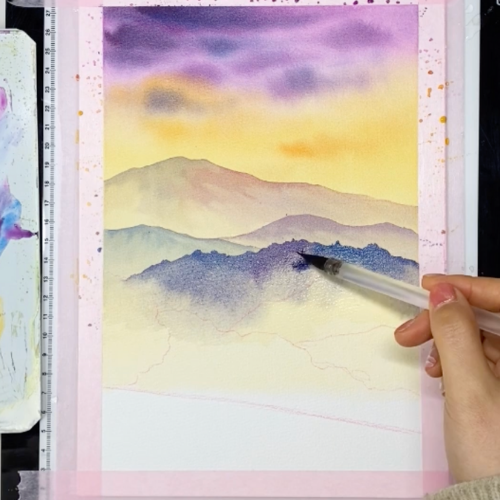
Step 4
:
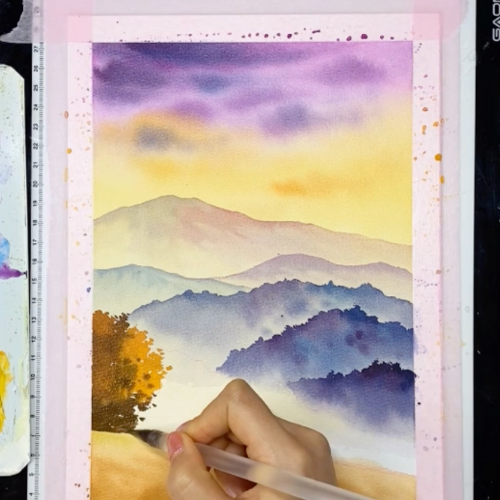
Step 5
:
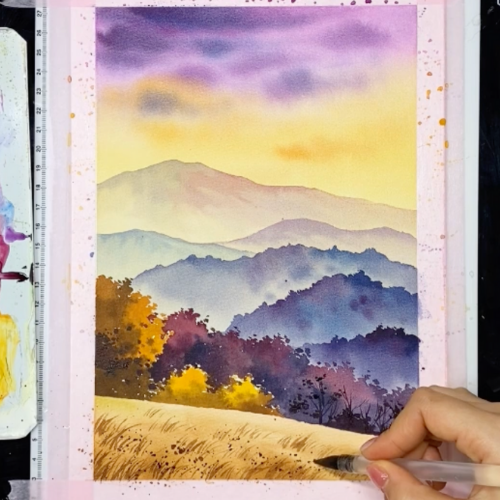
Step 6
Add Foreground Details: Focus on the foreground by incorporating more detailed and darker elements. Use smaller brushes for precision.:
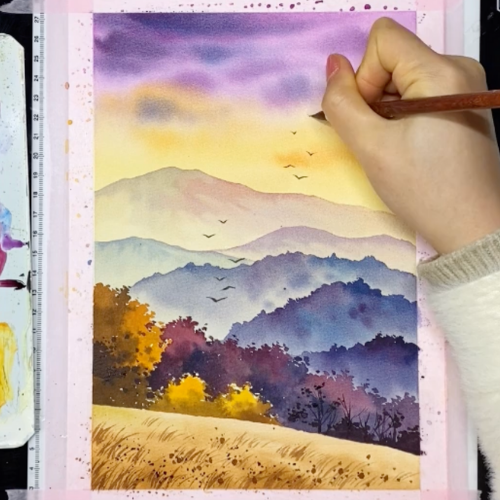
Step 7
Refine and Add Final Touches: Evaluate your painting and make any necessary adjustments. Add highlights or shadows to enhance contrast and depth.:
Following this structured approach helps ensure that each element of your painting is developed with attention to detail. As you gain experience, you’ll become more confident in adapting this process to suit your style and preferences.
Painting mountain scenes is a rewarding experience that allows you to capture the essence of nature. By following these steps and practicing regularly, you’ll improve your skills and create stunning landscapes that reflect your artistic vision.
Inspiration: Famous Mountain Watercolor Artists
Studying the works of renowned mountain watercolor artists can provide valuable inspiration and insights into different techniques and styles. Here are a few artists whose work I admire:
- John Singer Sargent: Known for his expressive brushwork and ability to capture light, Sargent’s mountain landscapes are both dynamic and atmospheric.
- Winslow Homer: Homer’s use of color and attention to detail bring a sense of realism and emotion to his mountainous scenes.
- Andrew Wyeth: Wyeth’s subtle use of color and texture creates hauntingly beautiful depictions of rural and mountainous landscapes.
Exploring the works of these artists can inspire you to experiment with new techniques and approaches. I find that analyzing their compositions and brushwork helps me understand how they achieved certain effects, which I can then incorporate into my own practice.
Conclusion: Embracing the Beauty of Mountain Landscapes in Watercolor
Mountain watercolor painting is a rewarding and enriching pursuit that allows us to capture the breathtaking beauty of nature. By mastering essential techniques, understanding color theory, and developing a unique style, we can create stunning landscapes that resonate with viewers.
I encourage you to embrace the challenges and joys of painting mountain scenes. Let the natural world inspire your creativity and guide your artistic journey. Whether you’re seeking to improve your skills or simply enjoy the meditative process of painting, mountain watercolor painting offers a fulfilling and expressive outlet.
As you continue to explore this art form, I invite you to share your work and discoveries with others. By connecting with fellow artists and enthusiasts, we can foster a supportive community and celebrate our shared passion for capturing the splendor of mountains in watercolor.